Based in Deptford, London SE8

07468 280520
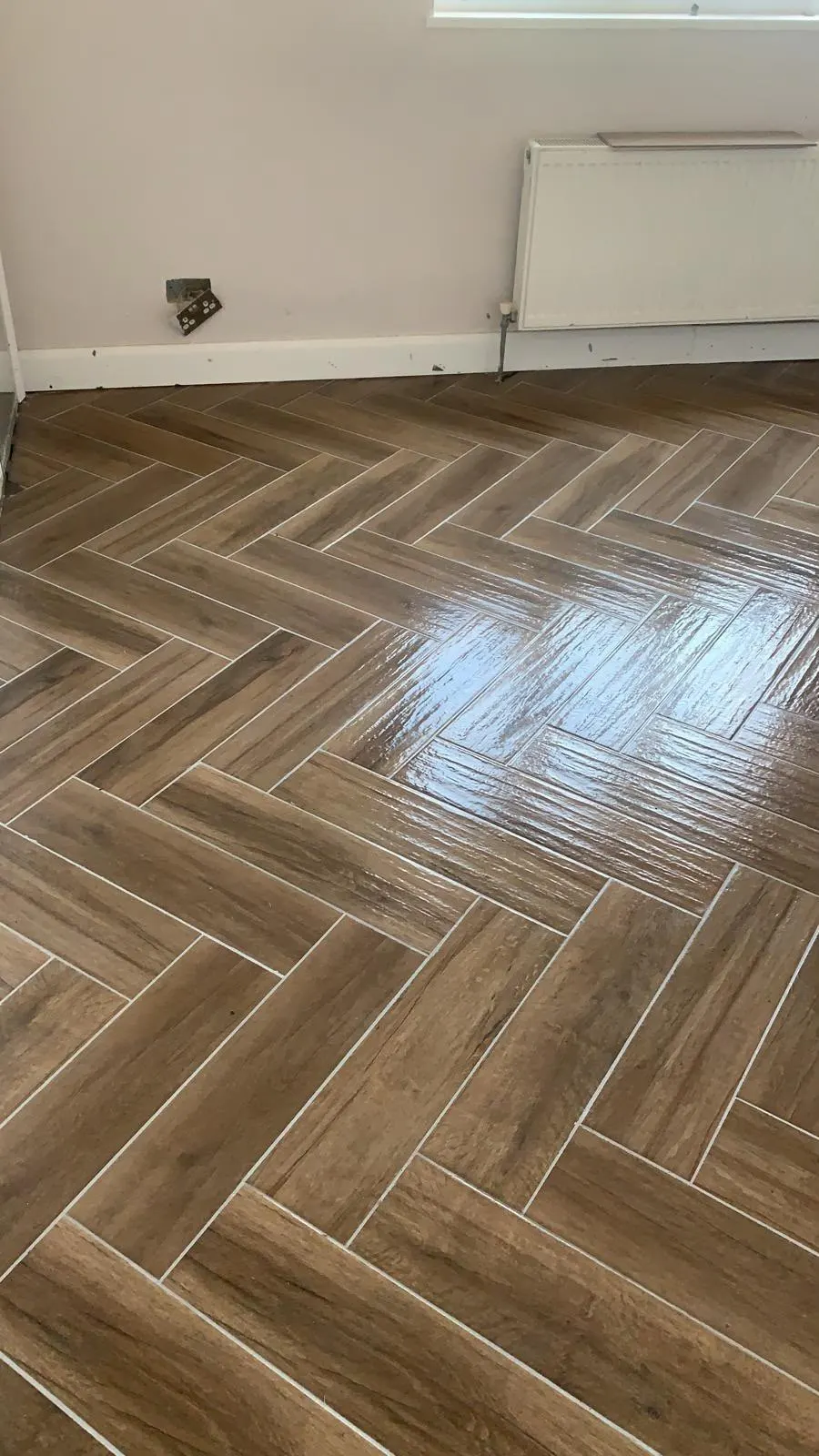
Floor and wall tiling in London: wood-effect herringbone floor tiles by a radiator

Wooden flooring in Deptford,including herringbone oak

A timber floor adds warmth and value to a home, but only if the subfloor and installation are right. We prepare properly and lay with precision, from straight plank floors to herringbone oak.

Get a Free Quote5.0 on Google · 20+ years' experience

Overview

Wooden Flooring, explained

What it is

Wooden flooring installation covers solid timber and engineered wood floors, laid as straight planks or in patterns such as herringbone. It includes preparing the subfloor, fitting underlay or adhesive as needed, laying the boards and finishing edges and thresholds.

Who it's for

Homeowners in period houses and modern flats who want a warm, natural floor; families renovating living spaces; and sellers or landlords upgrading a property.

When you need it

When carpets or laminate are worn, during a wider renovation, or when you want to add character and warmth to living areas, hallways and bedrooms.

Why it pays to use a specialist

Wood moves with temperature and humidity. Without the right preparation, acclimatisation and expansion gaps, floors cup, gap or squeak. Patterns like herringbone need accurate setting-out, or the pattern drifts across the room.

The cost of getting it wrong

What happens when this is left or rushed

Timber floors that aren't laid properly show problems within months.

Gaps and cupping

Wood that hasn't been allowed to adjust or that sits on a damp subfloor shrinks, swells and curls.

Squeaks and movement

Uneven or loose subfloors cause boards to flex and creak underfoot.

Wandering patterns

A herringbone floor that isn't set out from a true line drifts visibly across the room.

Damaged thresholds

Poorly finished edges and door transitions catch, split and wear quickly.

Common mistakes we're called in to fix

  • Laying wood straight onto an uneven or damp subfloor.
  • Fitting boards tight to the walls without expansion space.
  • Not letting timber acclimatise to the room first.
  • Setting out herringbone from a wall that isn't straight.
  • Choosing solid wood where engineered would be more stable, such as over underfloor heating.

Our process

Five clear steps, start to finish

  1. Step 1

    Survey

    We check the subfloor, moisture and room layout and help you choose the right type of floor.

  2. Step 2

    Preparation

    Subfloors are levelled, repaired and made ready for the chosen installation method.

  3. Step 3

    Setting out

    The layout, and for herringbone the centre line, is planned so the pattern sits square to the room.

  4. Step 4

    Installation

    Boards are laid with correct expansion gaps and careful cuts around doors and edges.

  5. Step 5

    Finishing

    Edges, thresholds and trims finished neatly, ready to use.

What you get

The result you're paying for

Warmth and character

Natural timber makes rooms feel warmer and more inviting.

Long-lasting floors

Good preparation reduces gapping, cupping and squeaks.

Precise patterns

Herringbone and other patterns set out accurately and symmetrically.

Works with heating

Suitable engineered floors can be combined with underfloor heating.

Clear payments

30% to book, 35% at halfway, 35% on completion.

Proven results

Customers have praised a herringbone oak floor installed by Tilermate as precise, clean and attentive to detail.

In detail

Materials, methods and options for wooden flooring

Solid vs engineered wood

Solid wood is timber all the way through and can be sanded many times, but it moves more with humidity. Engineered wood has a real timber top layer over a stable core, which makes it less prone to movement and better suited to underfloor heating.

Herringbone, chevron and plank

Straight planks suit most rooms and are quicker to lay. Herringbone and chevron add a classic, high-end look but require more cutting, careful setting-out and more time.

One of our reviewers specifically mentioned the beautiful herringbone oak floor Tilermate installed alongside their bathroom renovation.

Subfloors and installation methods

Wood can be glued down, nailed, or floated over underlay depending on the product and subfloor. Concrete subfloors must be dry; timber subfloors must be solid and flat.

Where we lay wooden floors

We install wooden floors across London and Surrey, including Notting Hill, Chiswick, Hampstead, Fulham, Parsons Green, Dulwich Village and Oxshott.

What affects the cost of wooden flooring

No two projects are priced the same, which is why we don't publish fixed prices. The main factors are solid or engineered timber, the board width and grade, the pattern (herringbone takes considerably more labour than straight planks), the condition of the subfloor, and the number of doorways, thresholds and edges to finish. The condition of what's already there matters too: a sound, flat surface is quicker to work on than one that needs repairing or rebuilding first.

The free quote visit is where these factors become clear. Emanuele will explain what's driving the price, flag anything that could change it once work starts, and give you a written quote so you can compare like for like. Payments are then staged at 30% to book, 35% at halfway and 35% on completion, so your money follows the progress you can see.

Looking after your wooden floor

Wood responds to its environment. Keeping humidity reasonably steady, especially in the first heating season, helps limit seasonal gaps. Felt pads under furniture, mats at external doors and prompt wiping of spills all extend the life of the finish.

Clean with a well-wrung mop and a cleaner made for your floor's finish rather than soaking it. Oiled floors benefit from periodic maintenance oil; lacquered floors need less attention. Solid and thicker engineered floors can be sanded and refinished years later, which is one reason timber is such a long-term investment.

Matching floors across rooms

In many London homes, the goal is a continuous floor running through hallway, living and dining rooms. That means checking floor heights between rooms, planning where the pattern starts so it reads correctly from the main entrance, and deciding how to handle transitions to tiled kitchens and bathrooms. Getting this right at the planning stage avoids awkward steps and mismatched joins later.

Where we work

We work across Central, West, South West and South East London, plus Surrey, including Mayfair, Kensington, Chelsea, Fulham, Richmond, Wimbledon, Clapham, Dulwich, Greenwich, Blackheath, Cobham and Esher. Popular areas for wooden flooring: Notting Hill, Chiswick, Hampstead, Fulham, Parsons Green, Dulwich Village, Oxshott. See every area we cover.

Related services

Why Tilermate

Why London homeowners choose Tilermate for wooden flooring

Emanuele Campoccia trained as a tiler in Italy from a young age and has more than 20 years of experience. Since 2014 he has worked across London and Surrey on homes and commercial properties, and he still leads every project personally. When you call, you speak to the person responsible for the result, not a call centre or a salesperson.

Customers consistently mention the same things in their Google reviews: attention to detail, professionalism, clear communication and a clean, precise finish. Those reviews average 5.0, and several describe Emanuele checking not only his own work but that everything else on the project was done correctly.

The commercial side is kept simple. Quotes are free and written. Payments are staged at 30% to book, 35% at the halfway point and 35% on completion, so you're never paying far ahead of the work. Tilermate Interiors Ltd carries public liability insurance of up to £5 million, and bathroom installations come with a 2-year workmanship warranty from handover.

We work Monday to Saturday, 7am to 6pm, on planned projects only. That focus means each job gets proper preparation and attention rather than being squeezed in between emergency call-outs.

Our work

Recent wooden flooring projects

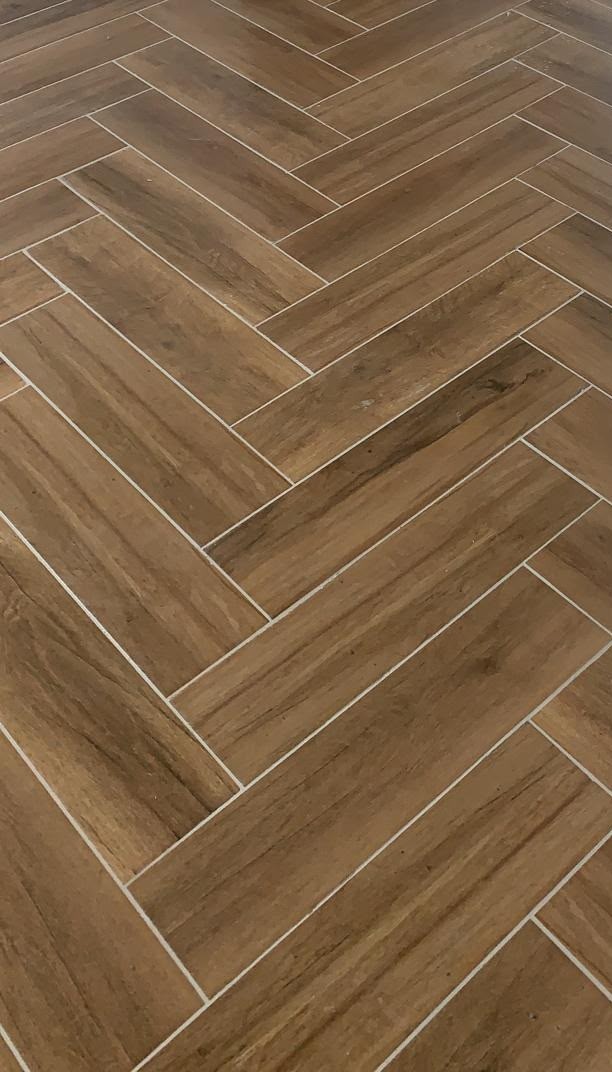
Wooden flooring in London: dark wood-effect herringbone floor
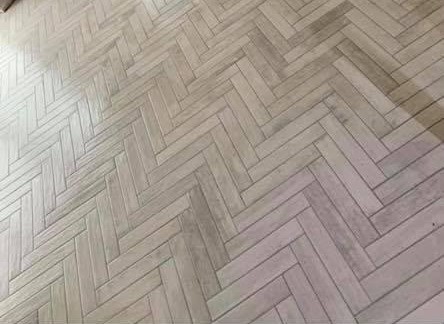
Wooden flooring in London: pale wood-effect herringbone floor
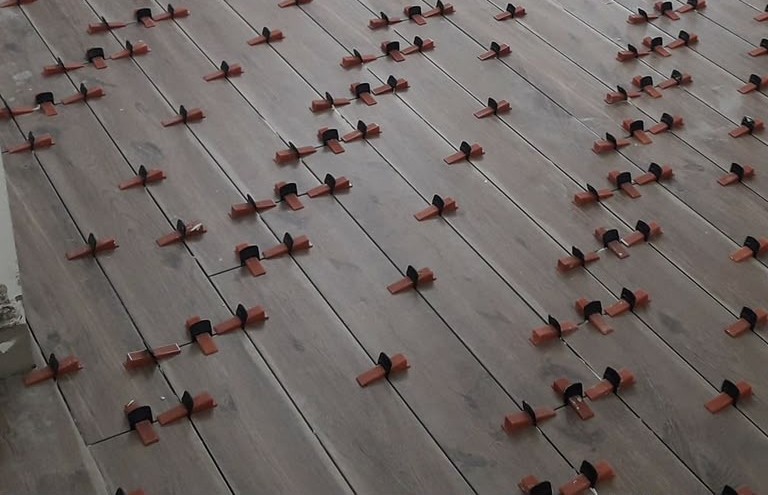
Wooden flooring in London: wood-effect planks being levelled during installation
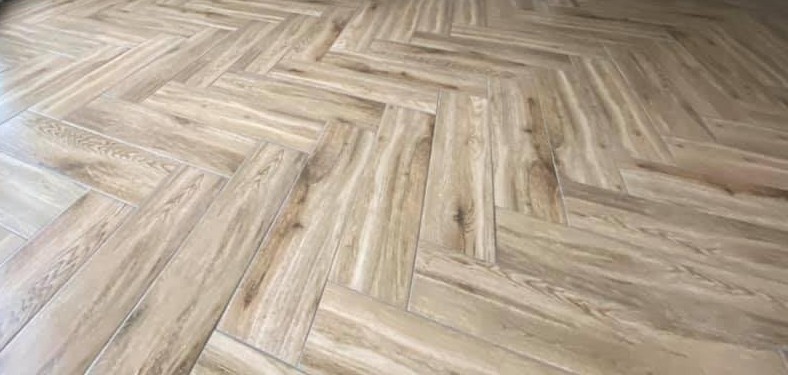
Wooden flooring in London: oak-effect herringbone floor with a glossy finish

FAQ

Wooden Flooring: your questions answered

Can wooden floors go in kitchens and bathrooms?

Wood and standing water don't mix well. Engineered wood may suit some kitchens; for bathrooms we usually recommend tile or stone.

Can I have wood over underfloor heating?

Usually yes, with a suitable engineered floor and the heating system planned to match.

How long does herringbone flooring take to lay?

Longer than plank flooring because of the cutting and setting-out. You'll get a timeline with your quote.

Do you supply the flooring?

We can advise on materials. Discuss supply options with us at the quote stage.

Is wooden flooring covered by your warranty?

Our 2-year workmanship warranty covers bathroom installations only.

How much will my project cost?

Every project is priced individually after a free visit, because size, materials and the condition of the existing room change the cost. You get a clear written quote before any work starts, with no obligation.

How do payments work?

30% deposit to book your start date, 35% when the job is halfway, and the final 35% on completion. You are never asked to pay far ahead of the work that has been done.

Are you insured?

Yes. Tilermate Interiors Ltd carries public liability insurance of up to £5 million.

Do you offer emergency call-outs?

No. We focus on planned renovation and installation work, Monday to Saturday, 7am to 6pm. That focus is what lets us give each project proper attention.

Get a wooden floor that stays flat, tight and beautiful

Book a free visit to check your subfloor and get a clear written quote.

£5m public liability · Staged payments · 5.0 on Google

07468 280520Free Quote